

22 Shturmova Aviacionna Basa (22. ShtAB) – Bezmer Air Base

History
Bezmer Air Base is situated in the eastern part of the Upper Thracian Lowland, in Yambol Oblast region, 10 kilometers west of the city Yambol and 30 kilometers southeast of the city Sliven, between the villages of Bezmer and Bolyarsko. The base takes its name from the nearby village, which is named after Khan Bezmer of Bulgaria (seventh century).
Bulgaria had always been a theatre of interest due to its strategical position, looking out to the Black Sea and consequently to Turkey and Russia and particularly favorable weather conditions of the area. The Imperial German Air Service built a base for Zeppelins in Yambol during World War I. The base was used for reconnaissance and bombing missions to Romania, Russia, Sudan and Malta. In 1955 the 22 Fighter Air Regiment was based at Bezmer, later this unit transformed into 22 Fighter-Bomber Air Regiment and eventually into 22 Attack Air Base. Now the units name is 22 Shturmova Aviacionna Basa which means 22nd Assault Aviation Base.
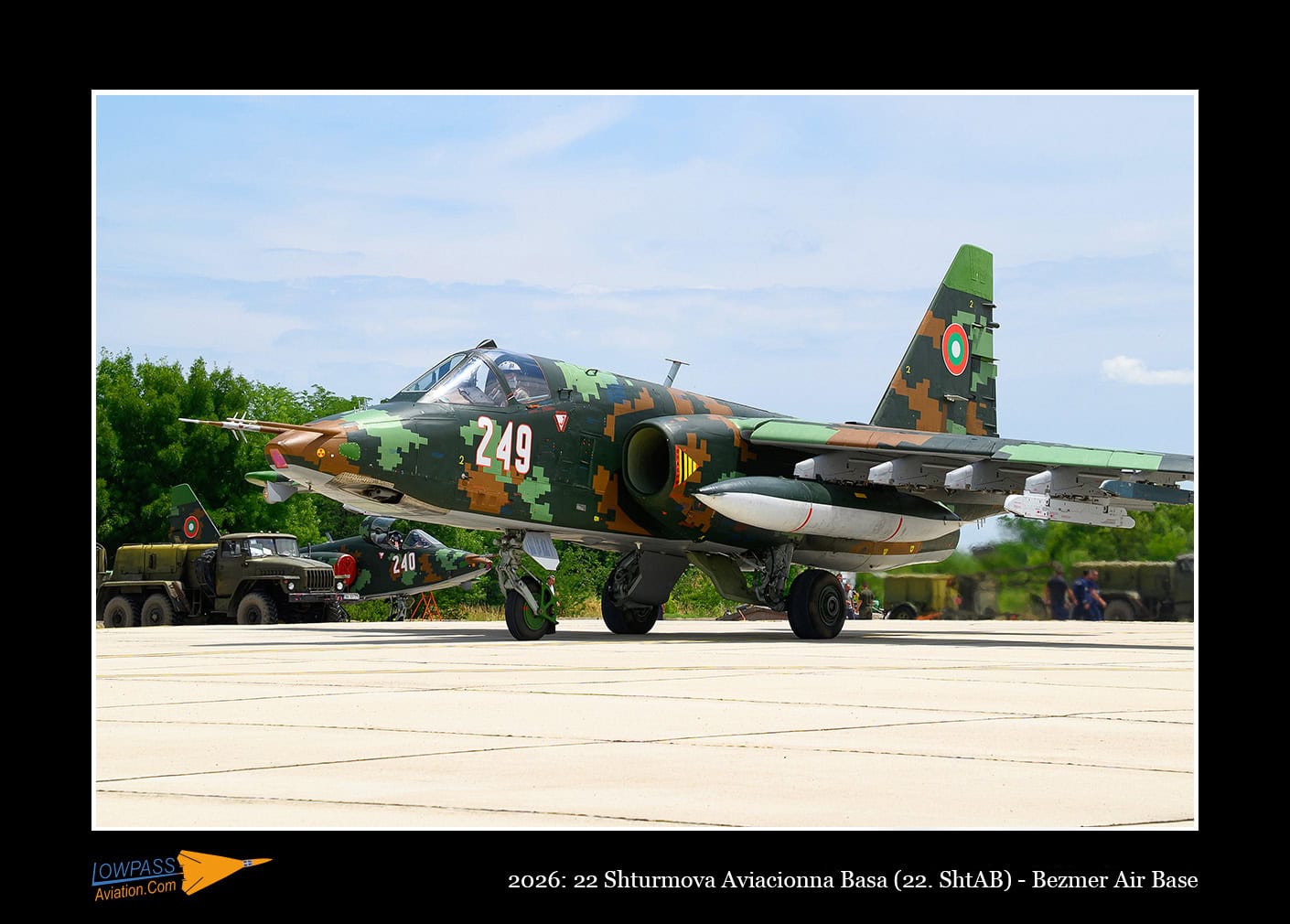
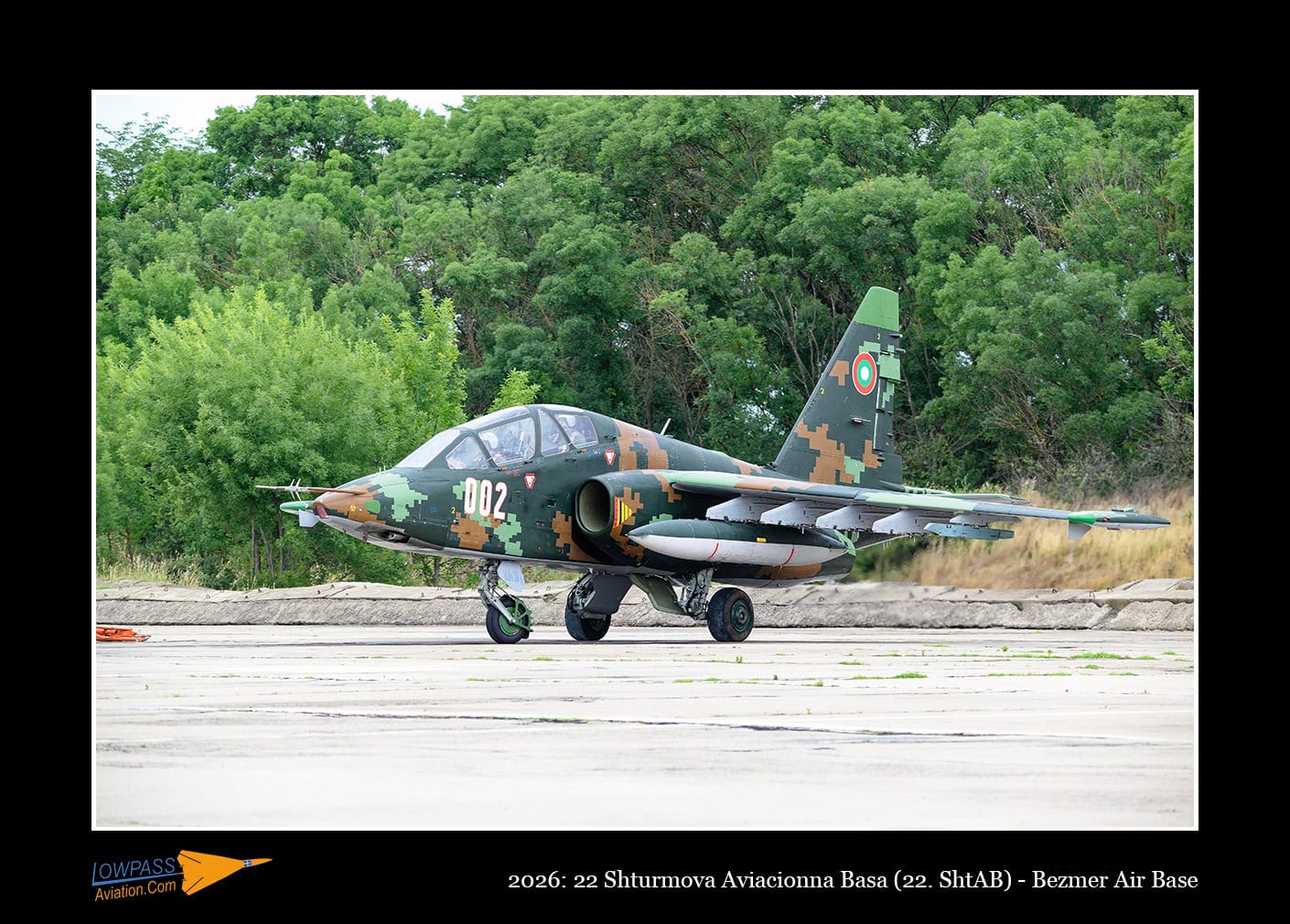
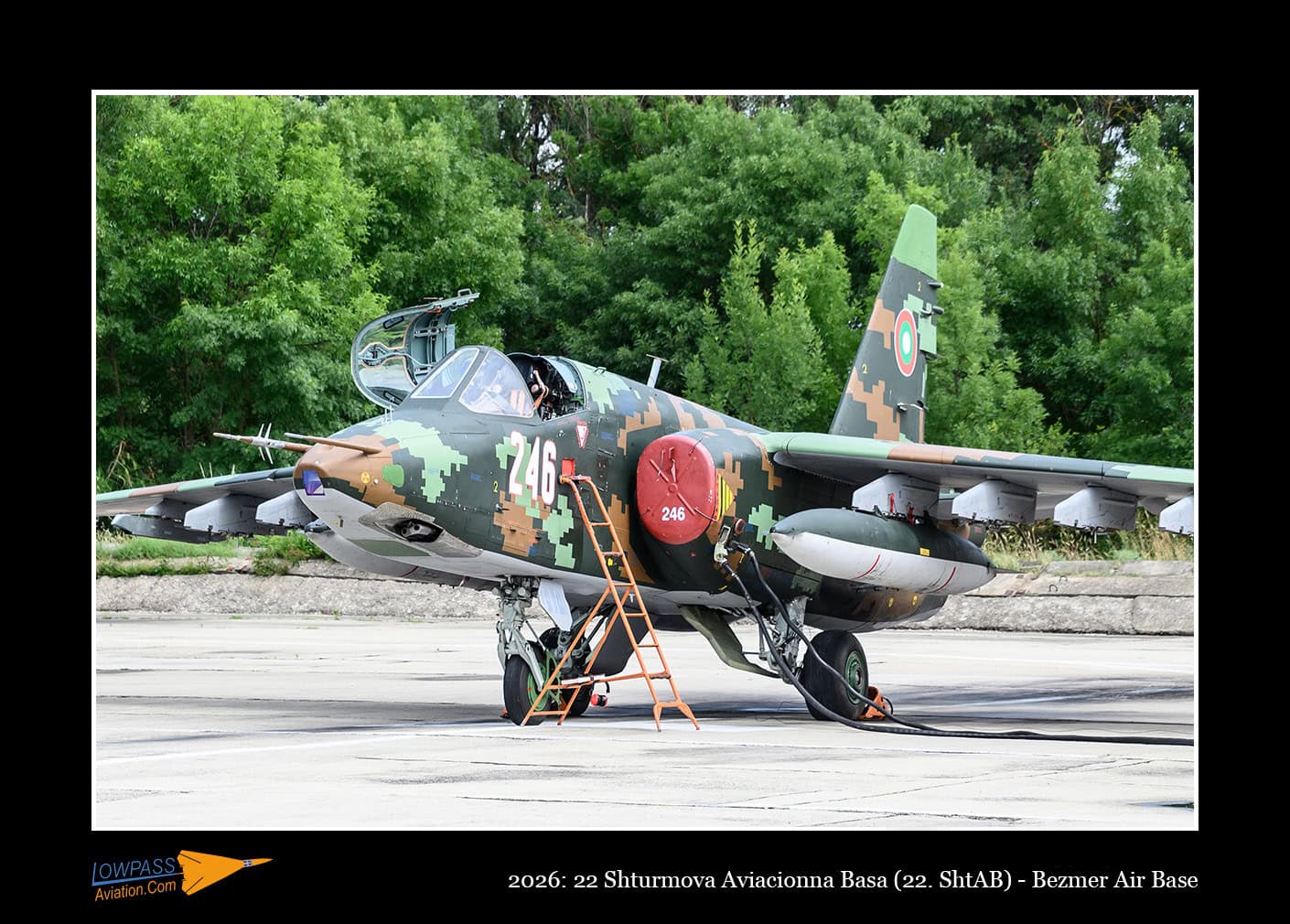
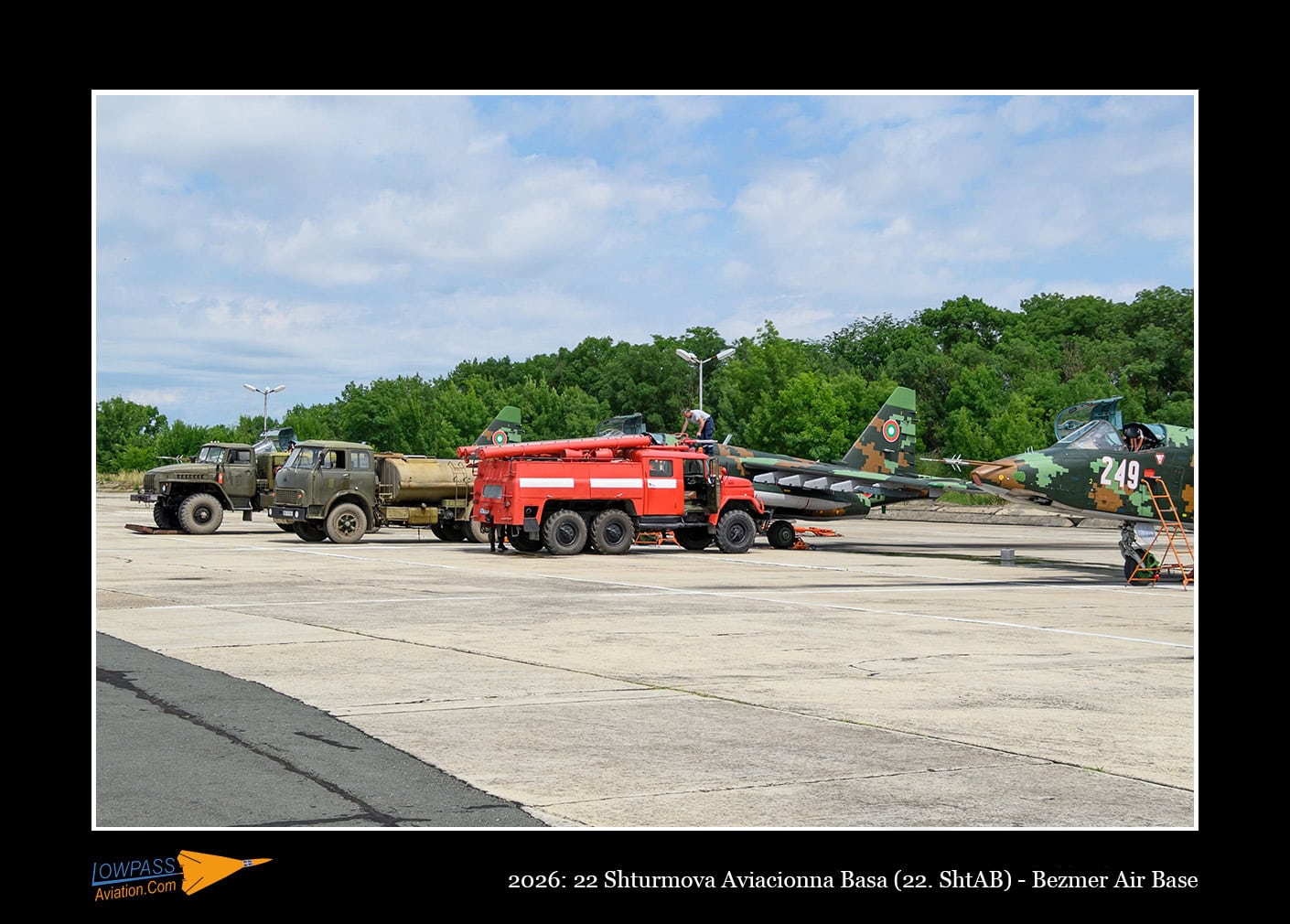
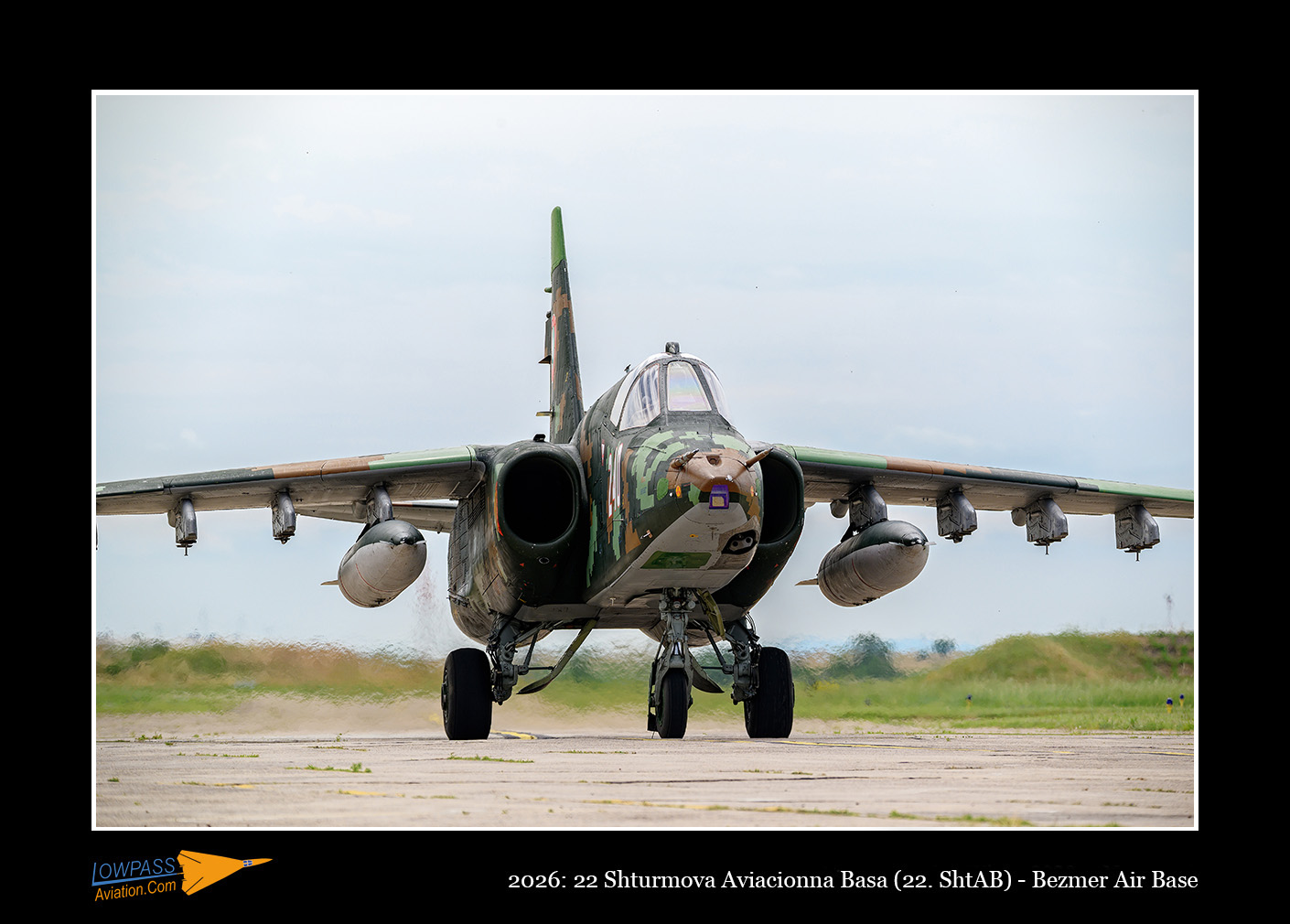
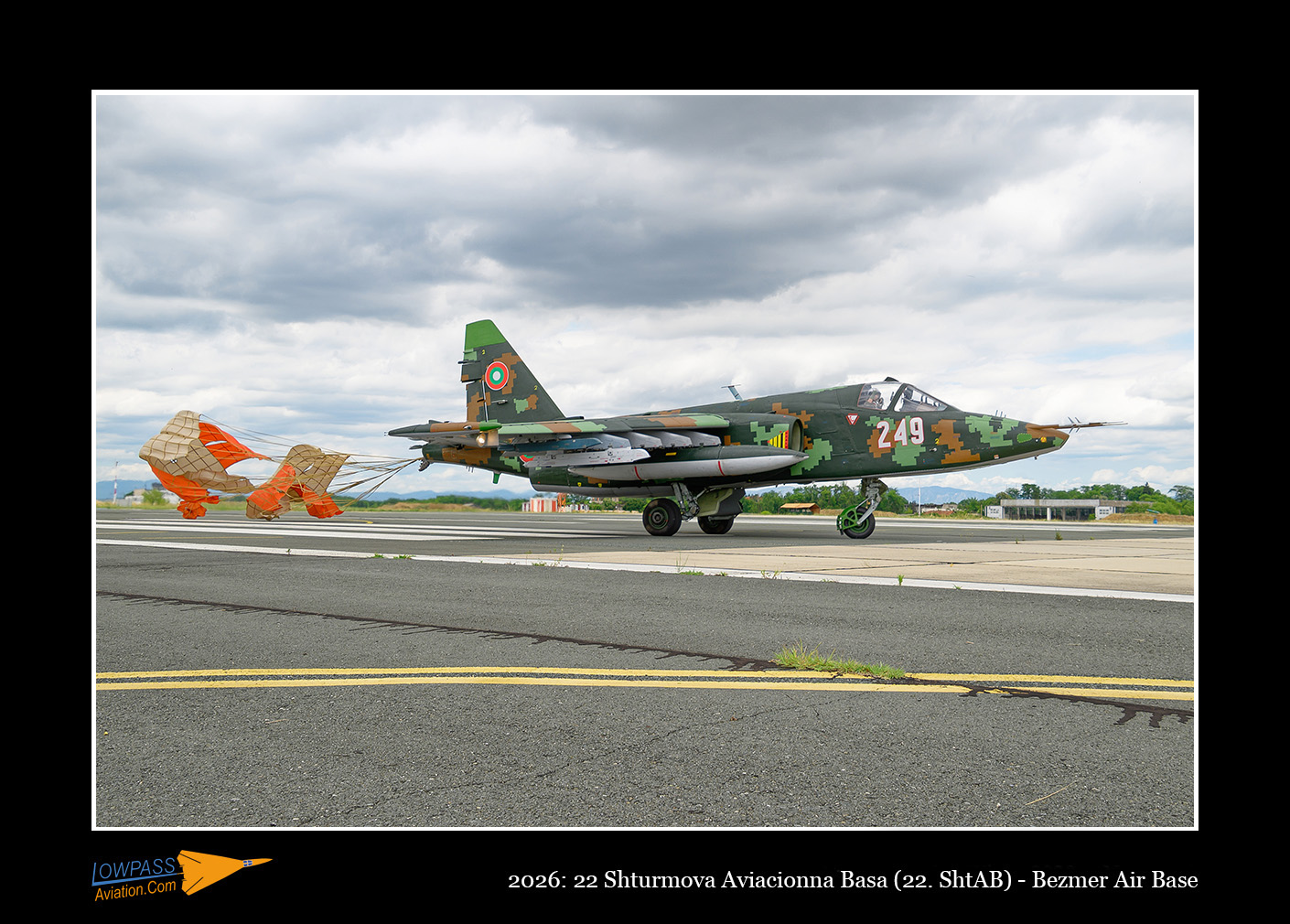
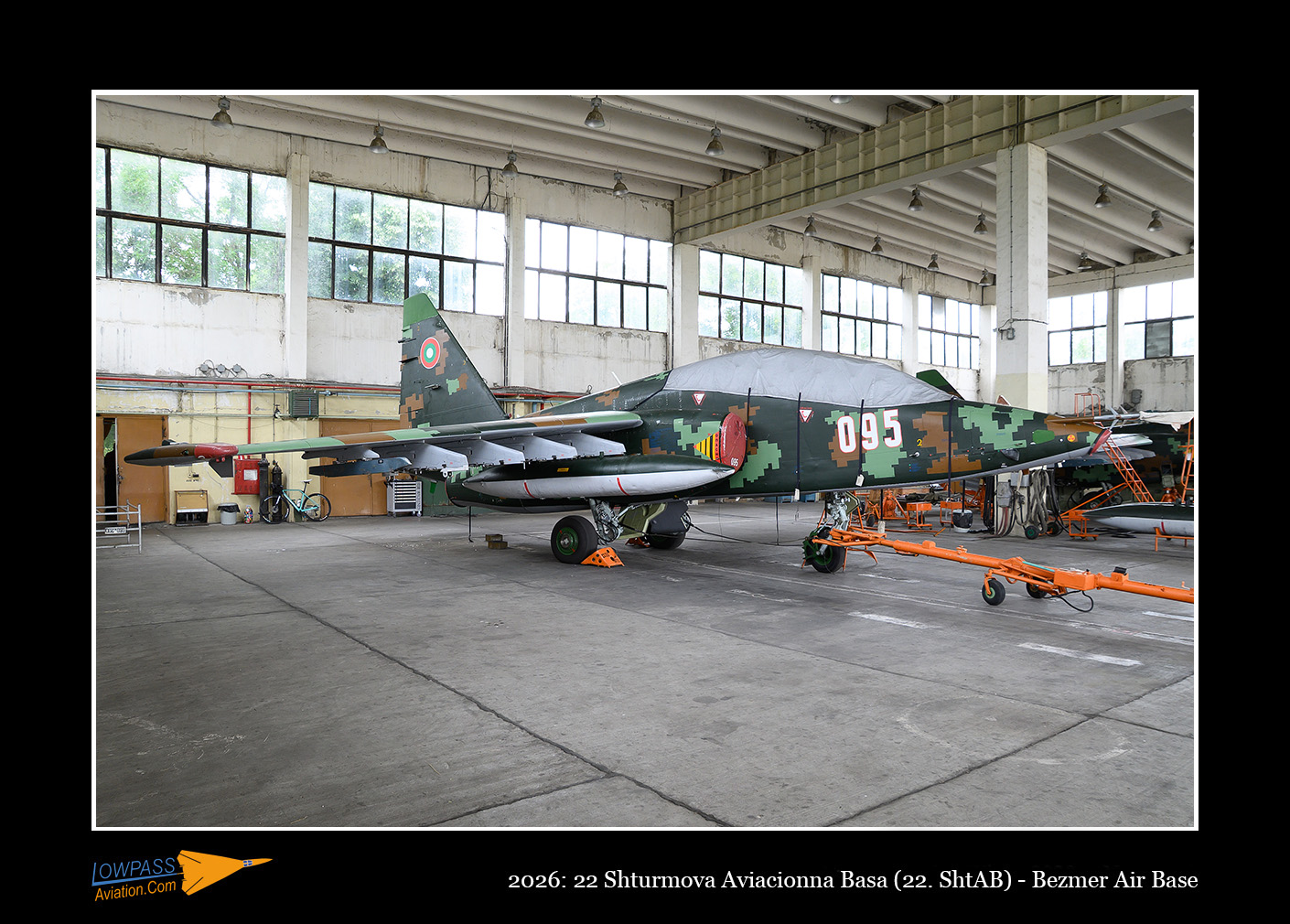
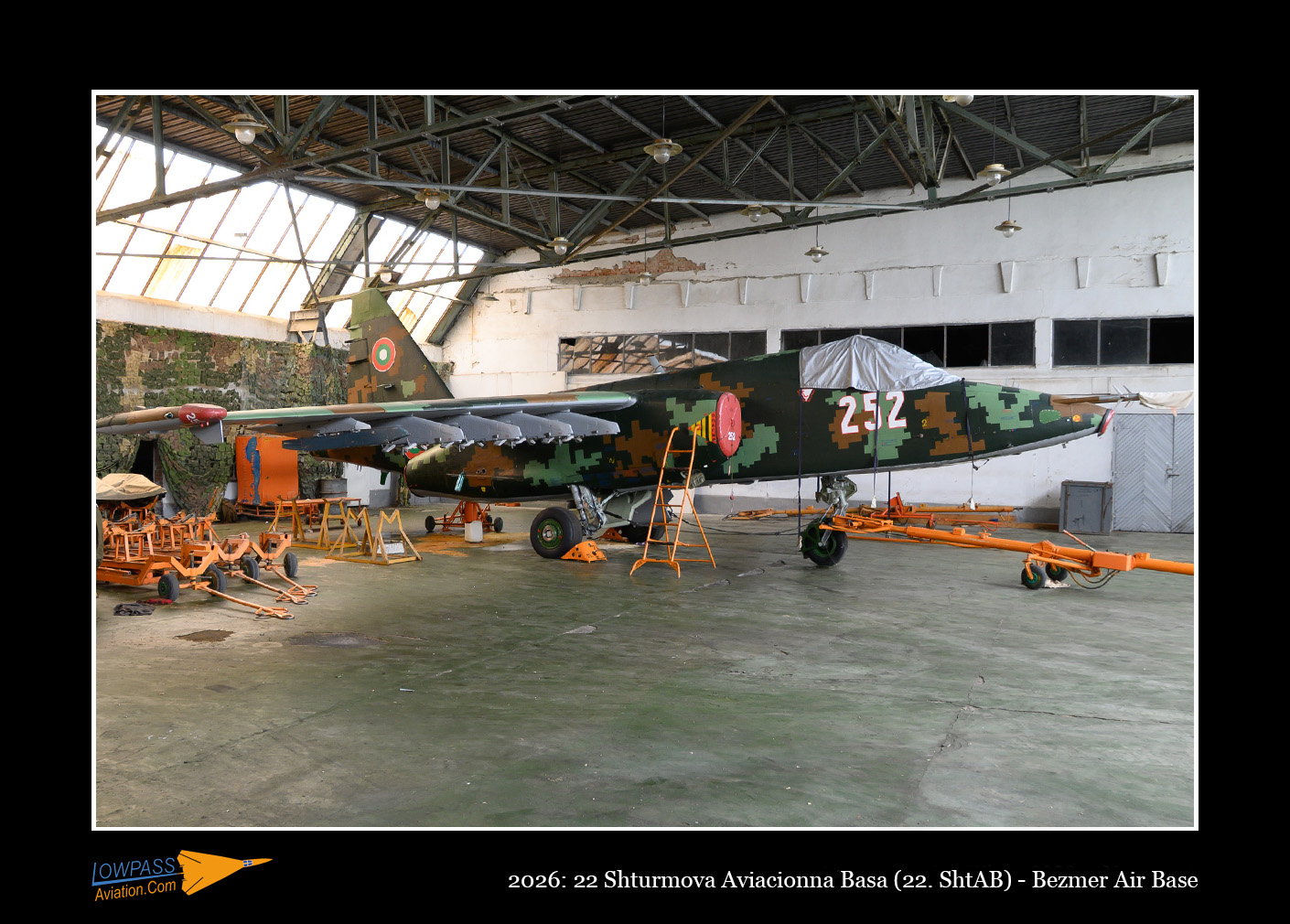
The Bálgarski Voenno Vázdusni Sili (Bulgarian Air Force) was at its maximum power during the period of alliance with the Soviet Union under the Warszawa Pact when it operated around 400 aircraft like MiG-17, MiG-19, MiG-21, MiG-23, MiG-29, Su-22 and Su-25 and around 100 helicopters like Mi-17 and Mi-24. After the cold war the Soviet support in terms of machines and spare parts ended which resulted in an important resizing. The MiG-17, MiG-19 and later the MiG-23, Su-22 and many MiG-21s were withdrawn from use. In the late 1980s a total of 40 Su-25 aircraft, 36 Su-25K single-seat and 4 Su-25UBK double-seat, entered service and were based at Bezmer. The Su-25s took over the ground attack role, supported by the L-39s, from the MiG-21s which were retired from service. The Su-25 represents an effective and survivable attack workhorse purposely designed to fly short-range battlefield Close Air Support (CAS) missions. The Su-25 proved itself as a powerful weapon in many local conflicts. The high precision in turn allows the Su-25 to undertake non-visual bombing runs in poor weather and at night at low and medium level against fixed targets with known positions using unguided bombs from levelflight.
During the late 1990s there were some problems with the Su-25 aircraft, mainly because they ran out of spare parts, and for different reasons it was decided to place over half of the fleet into storage at Bezmer Air Base. Later, most of the aircraft that were placed in storage were sold to the Georgian Aircraft company TAM. Fortunately, the Bulgarian Airforce was able to keep 14 Su-25s in active service within the Bulgarian Air Force. This number consists of 10 single-seat Su-25K and 4 double-seat Su-25UBK aircraft. These 14 aircraft had received an overhaul and minor avionics upgrade. According to the 2006 Defense Cooperation Agreement between the United States and Bulgaria, Bezmer is among the joint US-Bulgarian military bases and is an important base for the United States. Also, the base was modernized, including modern communication, information, navigation systems and infrastructure development, including a runway extension and new (larger) platforms, which would expand the range of aircraft the base can support.

Overhaul and upgrades
In November 2018 the Bulgarian Ministry of Defense signed a US Dollar 85.5 million agreement with the 558th Aviation Repair Plant (558th ARP) Baranovichi, Belarus, for major overhaul and life extension with avionics and weapons upgrade for the Su-25 fleet of the Bulgarian Air Force. The initial idea was to overhaul all 14 Su-25 aircraft, but the contract was downgraded to 8 Su-25 aircraft, 6 single-seat and 2 double-seat aircraft. The recalculated costs for the major overhaul of 8 aircraft were US Dollar 24.3 million. It took longer before the Su-25s could leave Bulgaria due to strong restrictions against Belarus with regards on the supply of weapons. The Bulgarian authorities and banks could not decide whether the Su-25 aircraft could be temporarily sent to the Republic of Belarus against which the EU constantly extends the embargo on the supply of weapons and equipment that can be used for “internal repression”. Since no payments were made under the contract until the end of 2018, the amount was postponed to 2019.
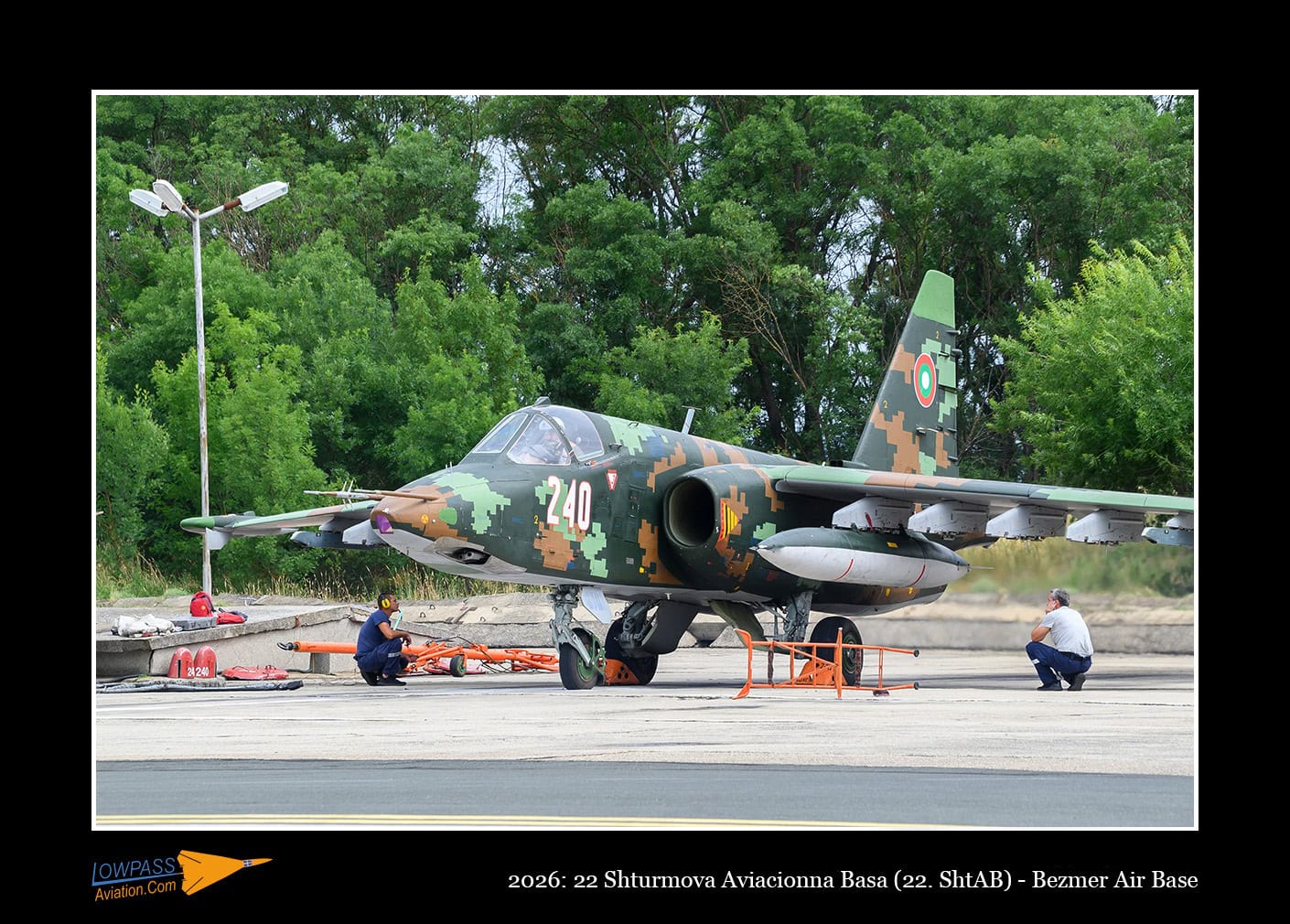
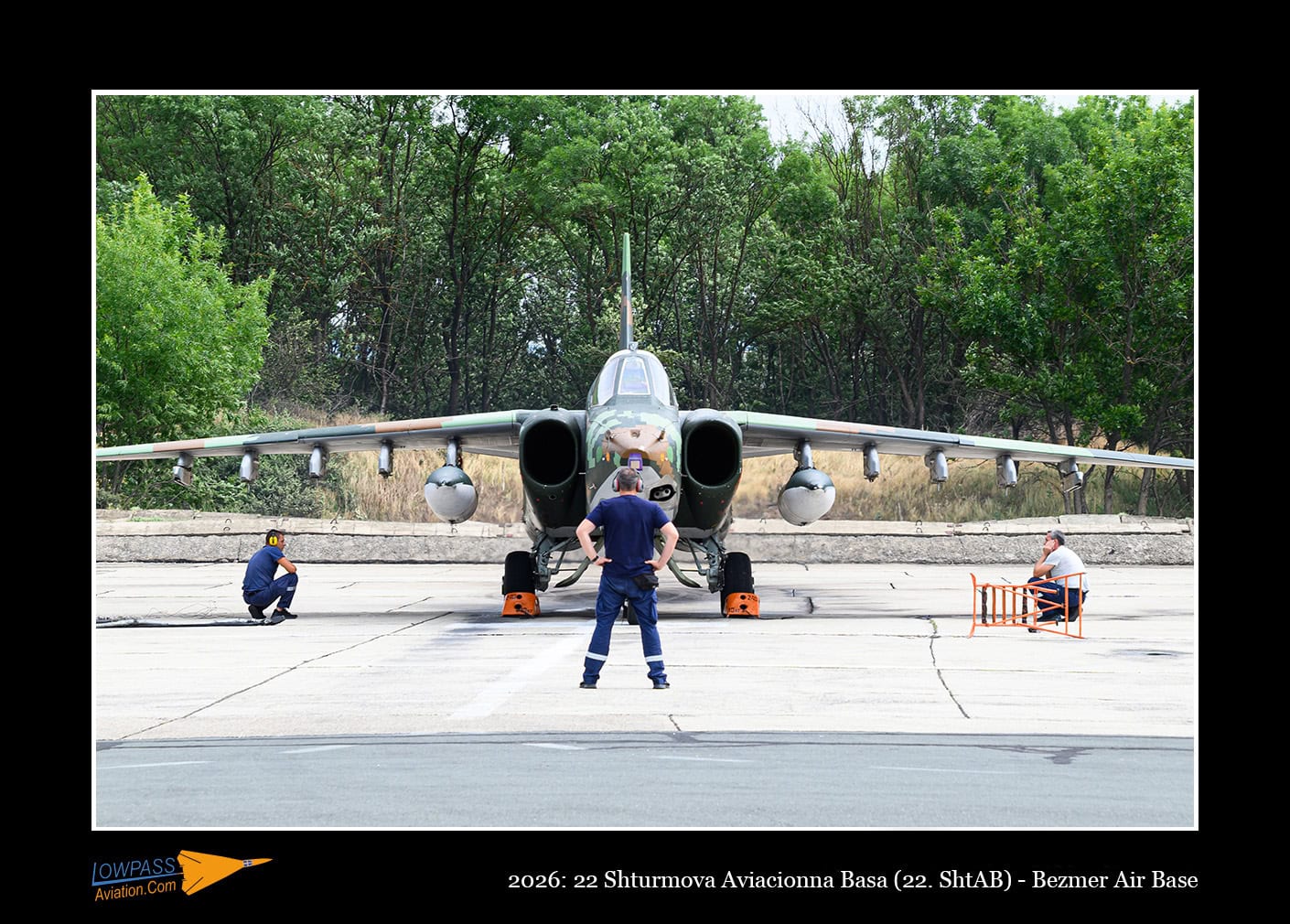
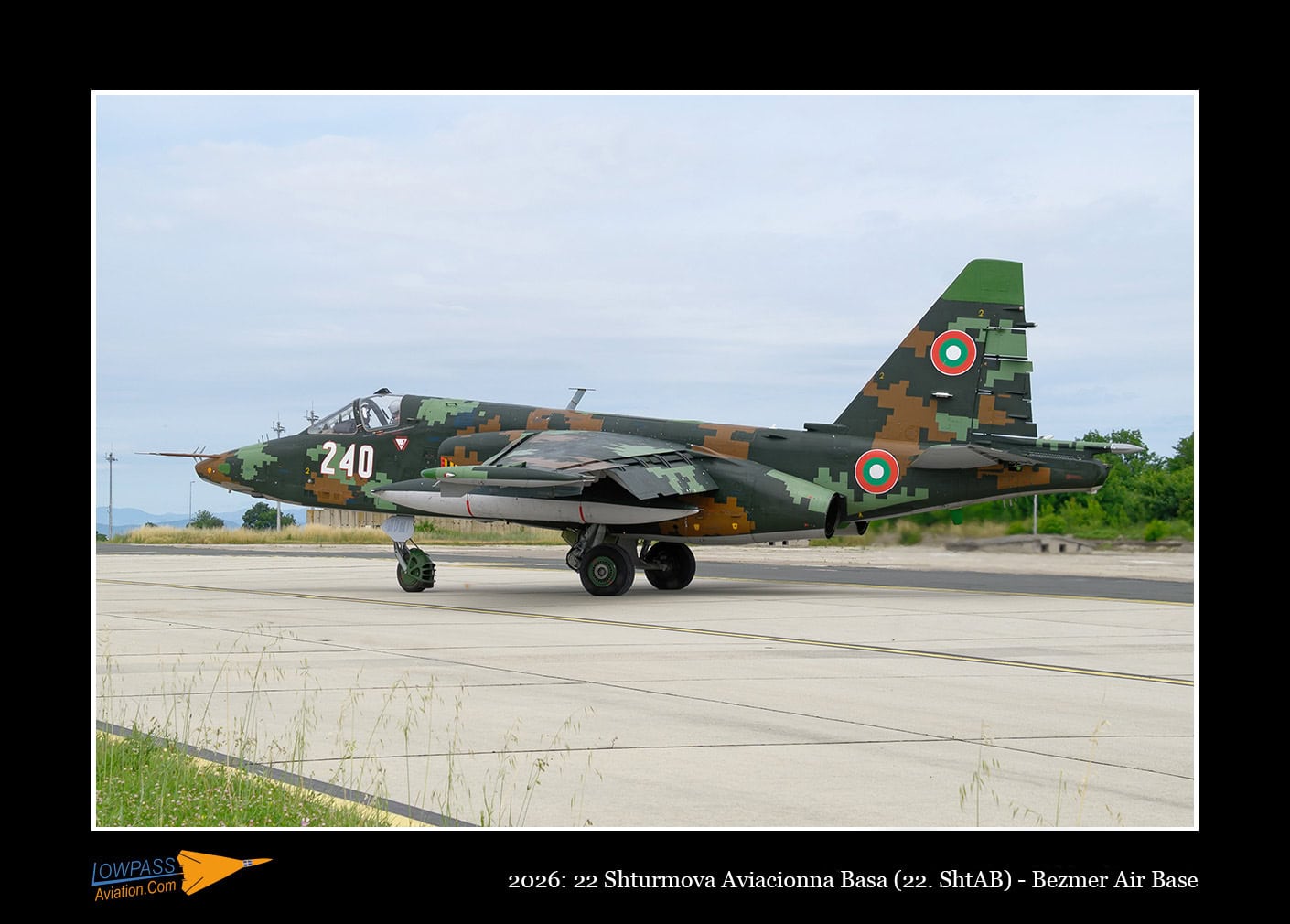
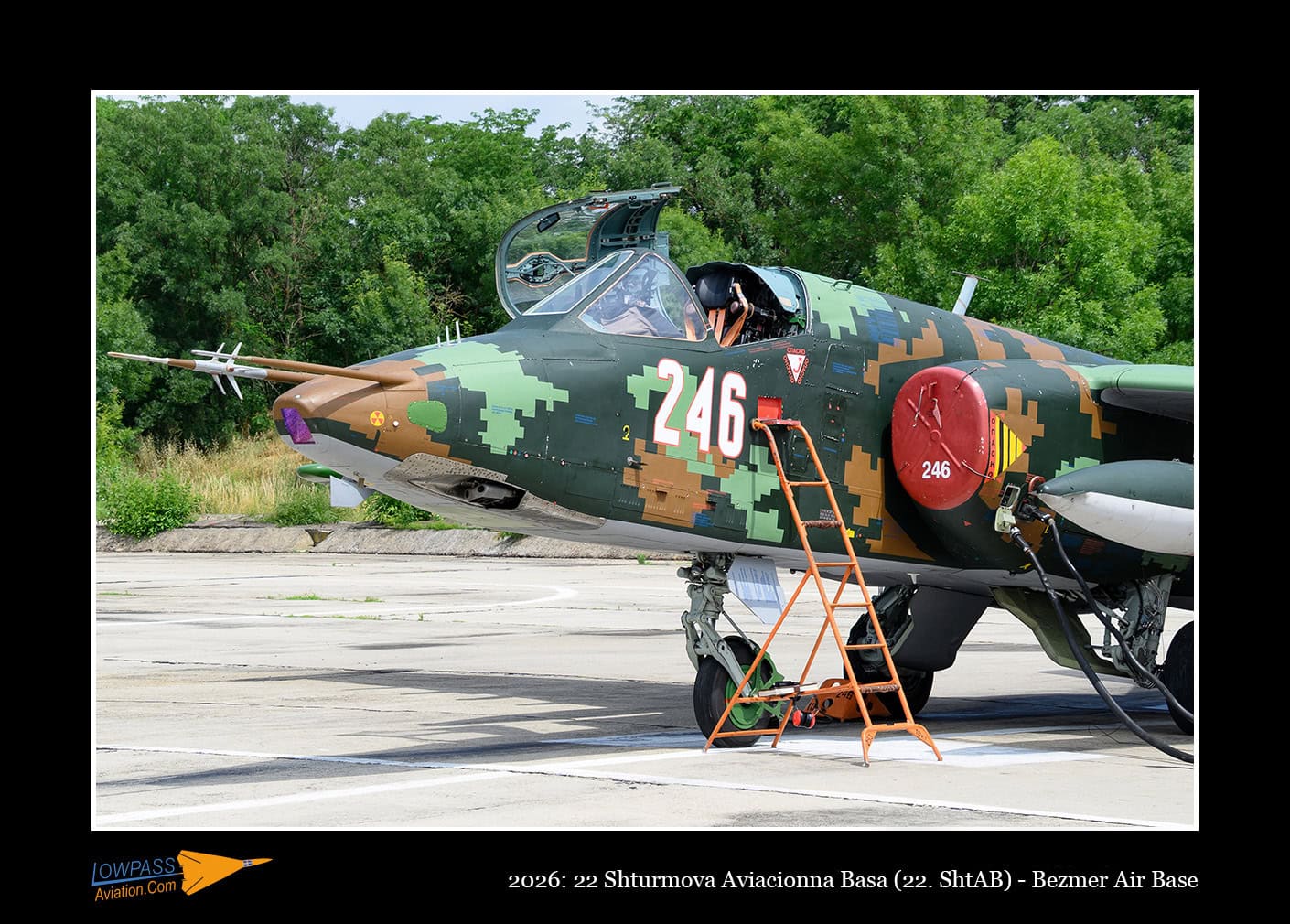
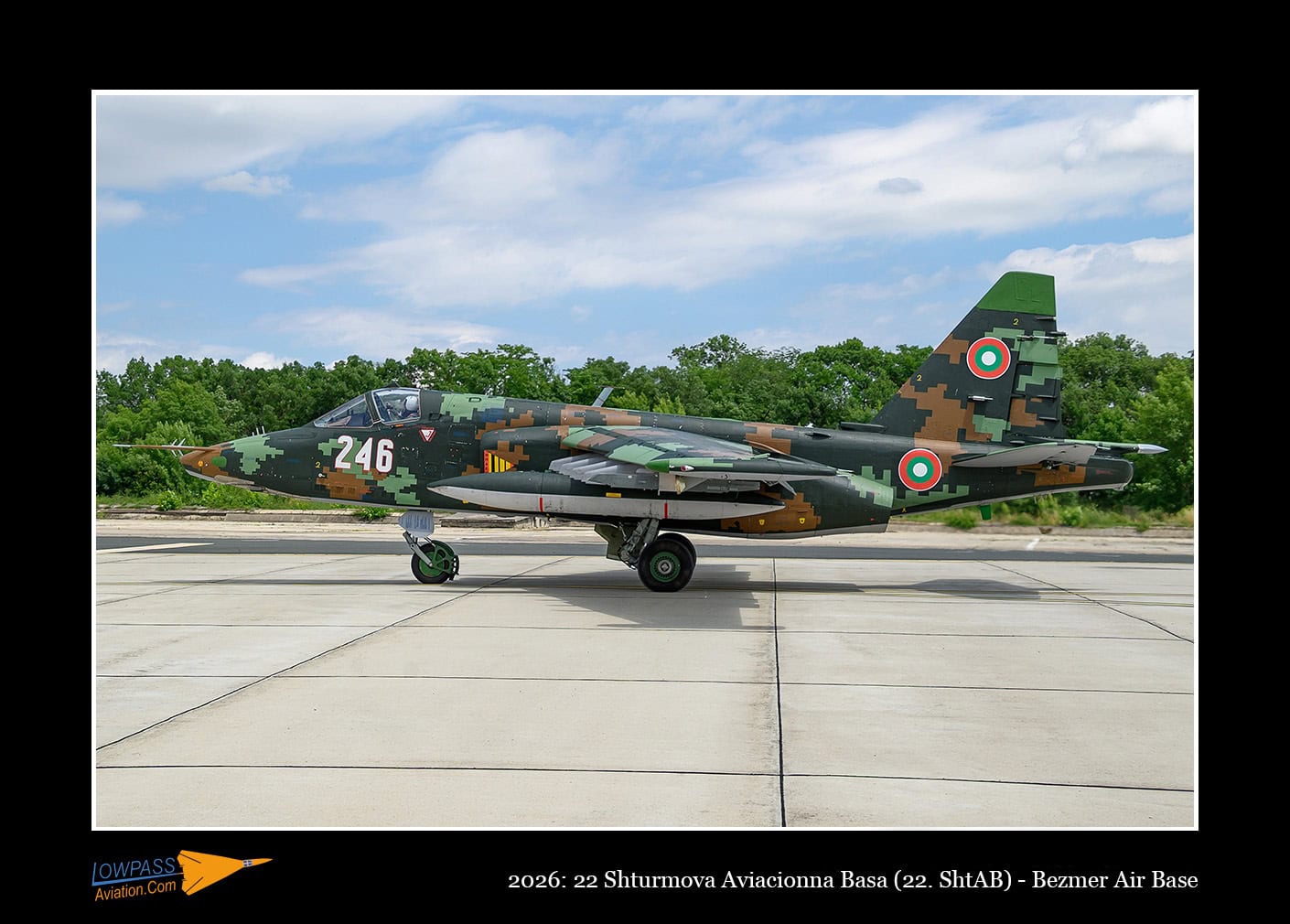
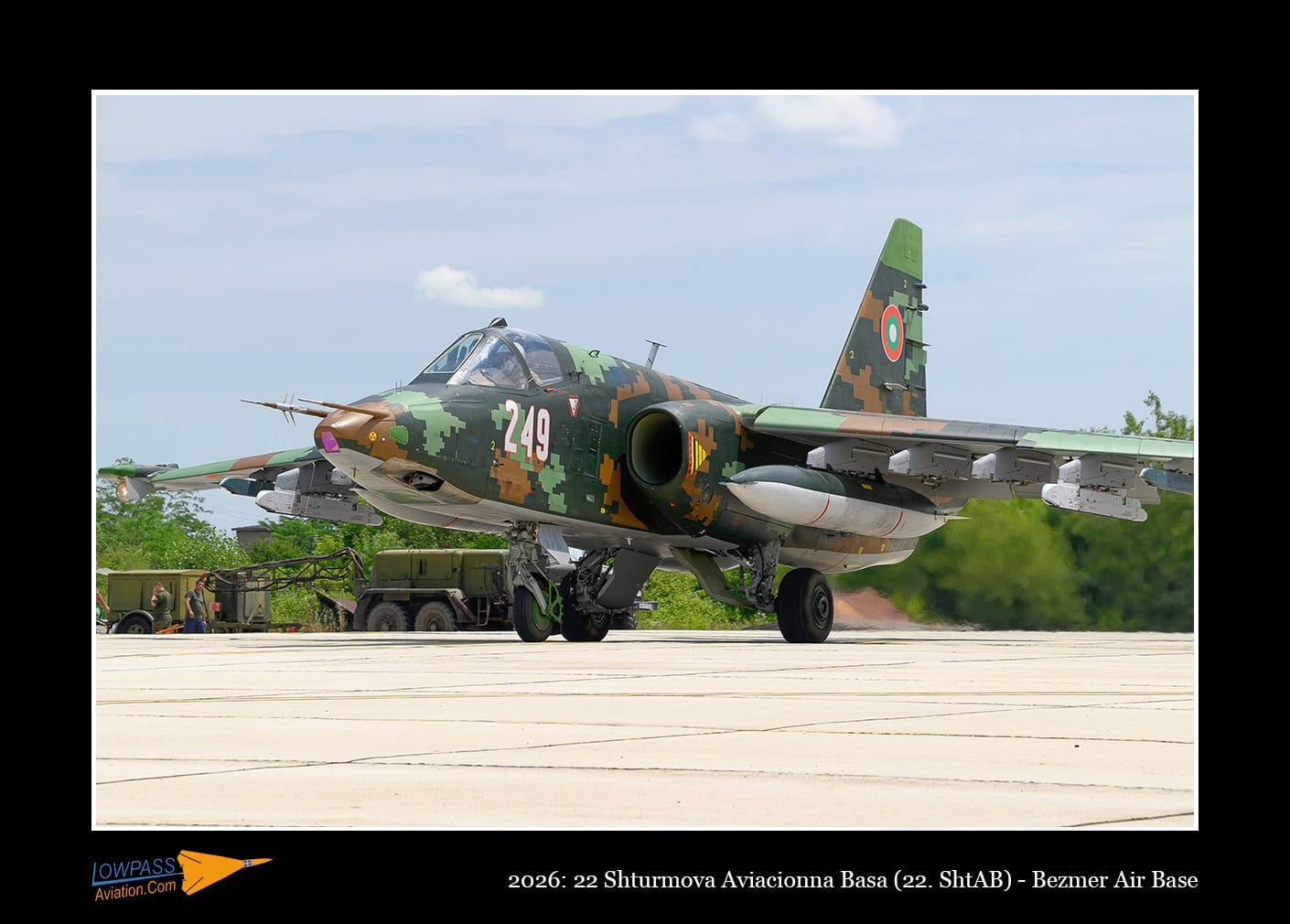
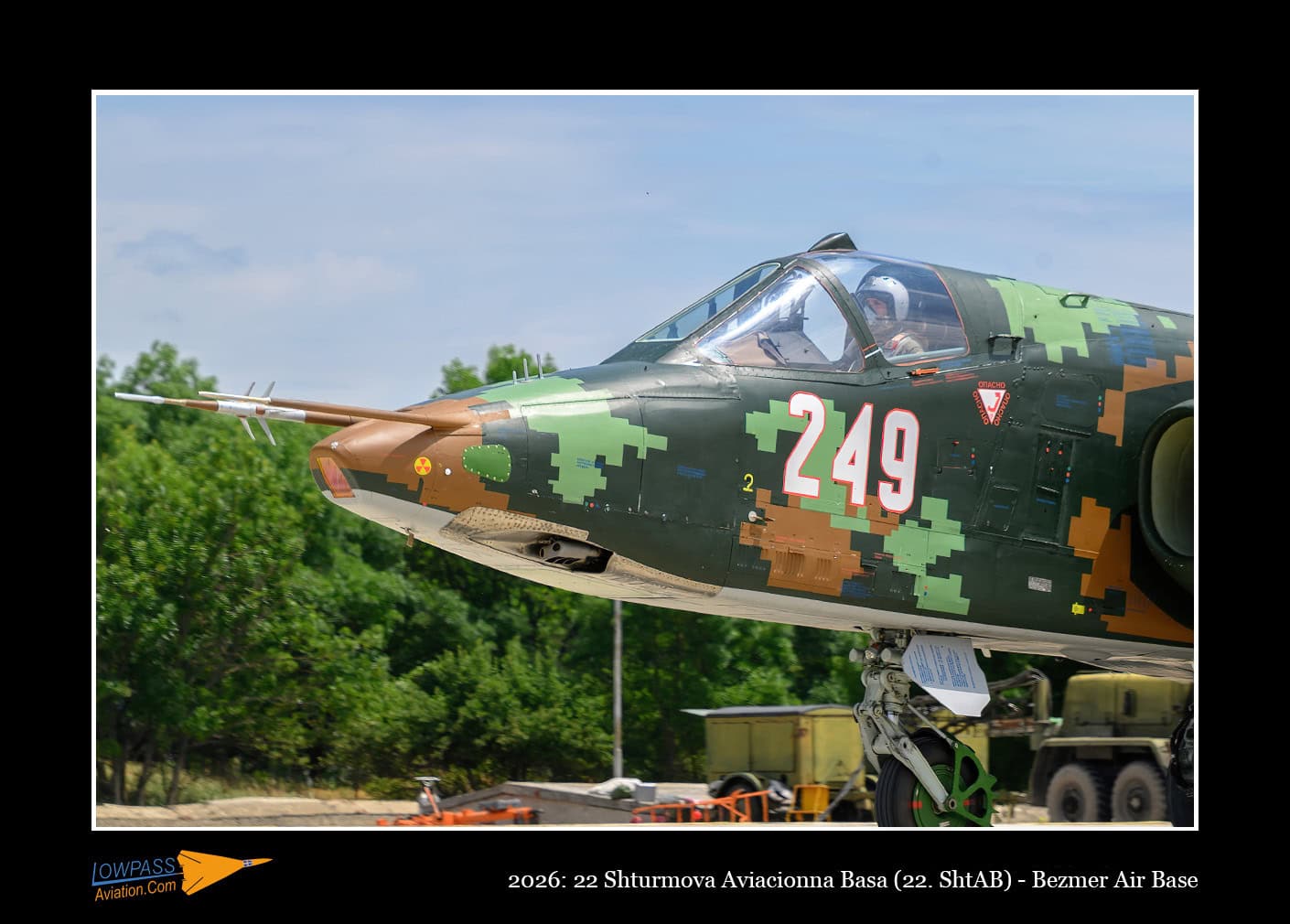
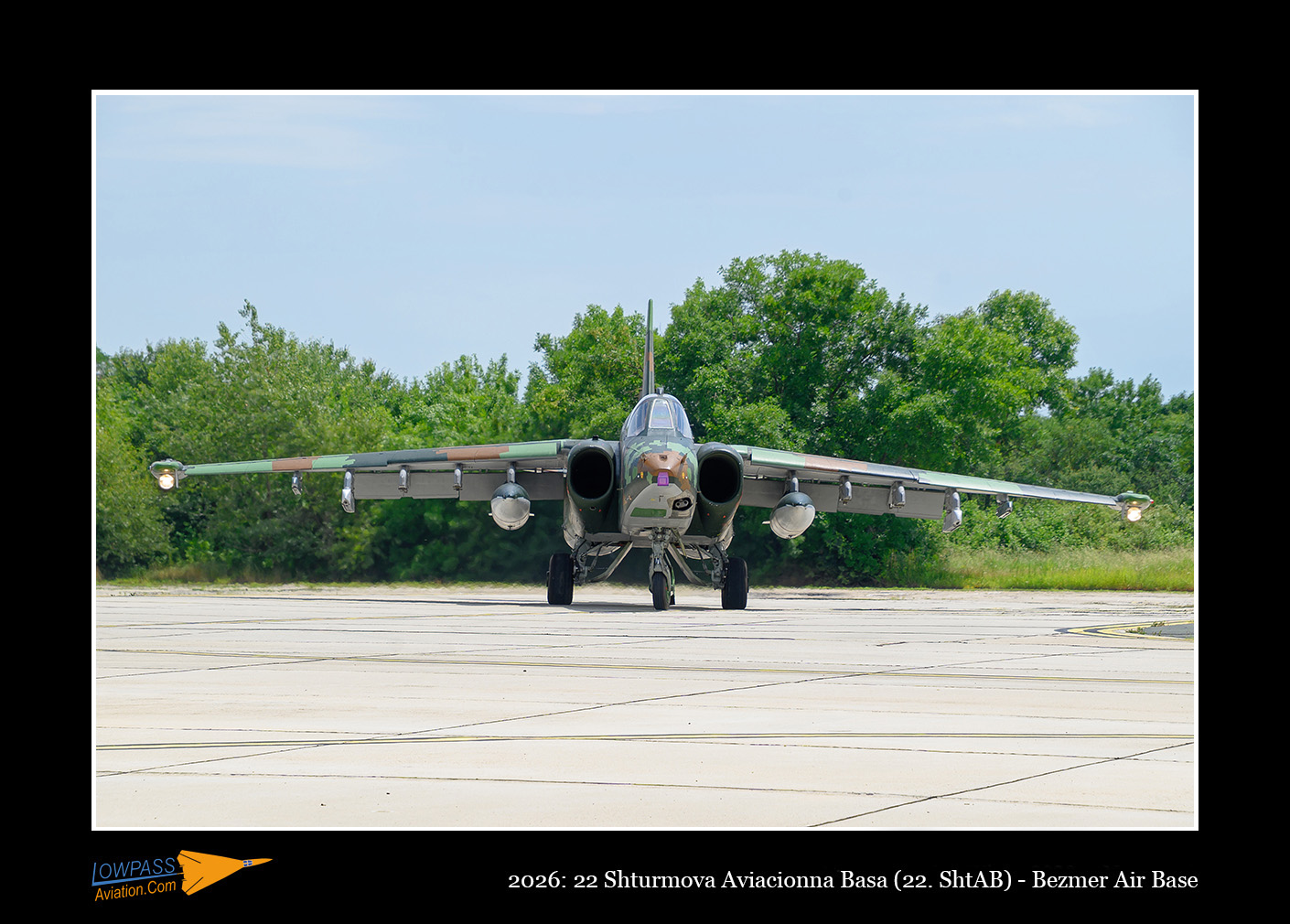
The overhaul and upgrade program began on 28 August 2019 when the first Su-25 aircraft was transported by air to Baranovichi, Belarus. The major overhaul and upgrade included the installation of new radio’s, new navigation systems with a satellite receiver, enhancing the information’s that pilots need to accomplish their missions, an upgraded flight data recorder, a digital audio and video recorder, a new Head Up Display (HUD) providing a field of view double that of the old electro-optical sight and multi-functional cockpit displays used to display a digital map and flight, navigation and tactical information. The combination of all these updates increased significantly the accuracy when employing unguided ordnance with visual aiming. Also 16 R-95Sh engines were overhauled, which gives them a life extension of 500 flight hours. The weapon systems had been enhanced with the introduction of the integration of the R-73 (AA-11) Archer highly agile short-range air to air missile.
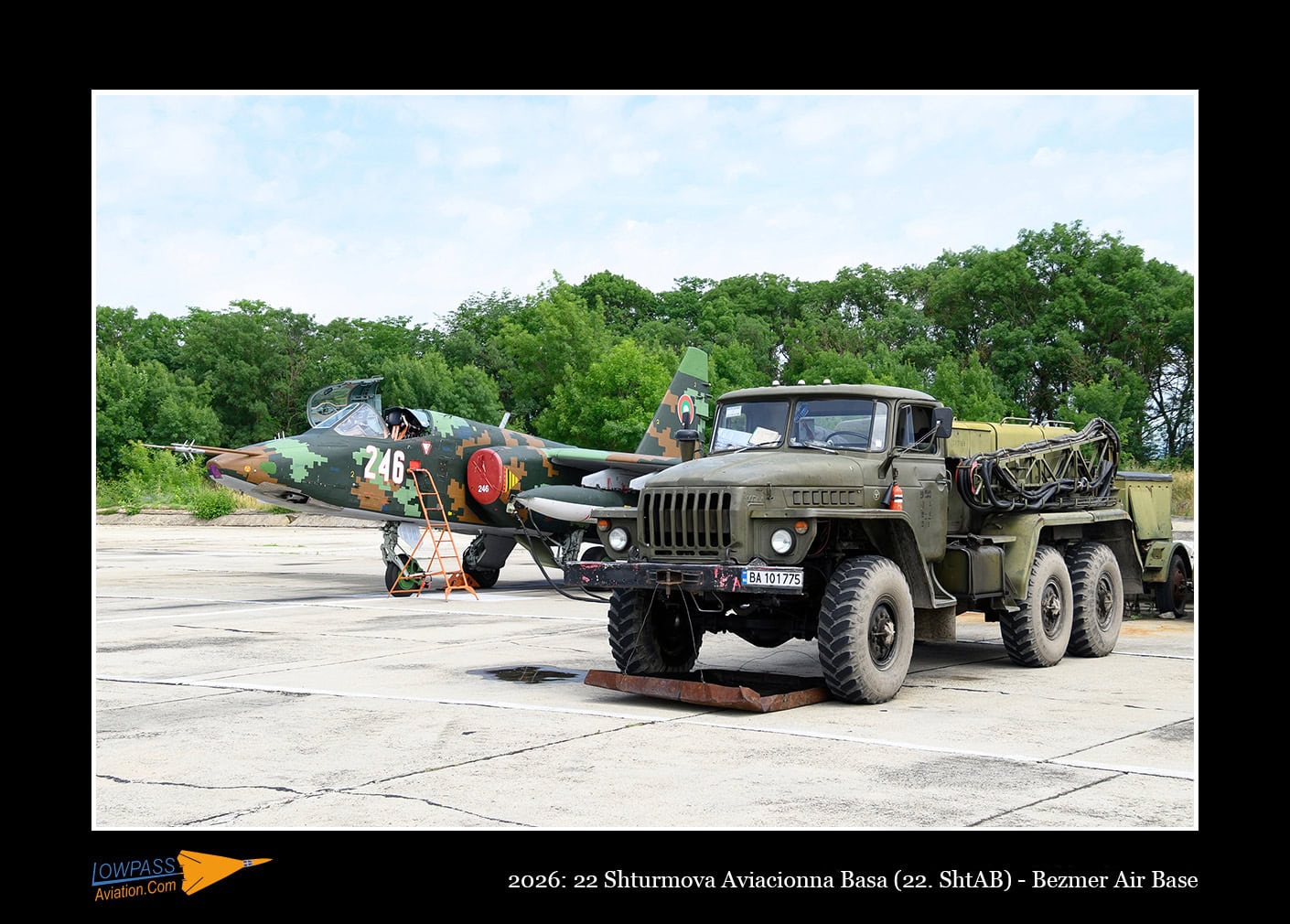
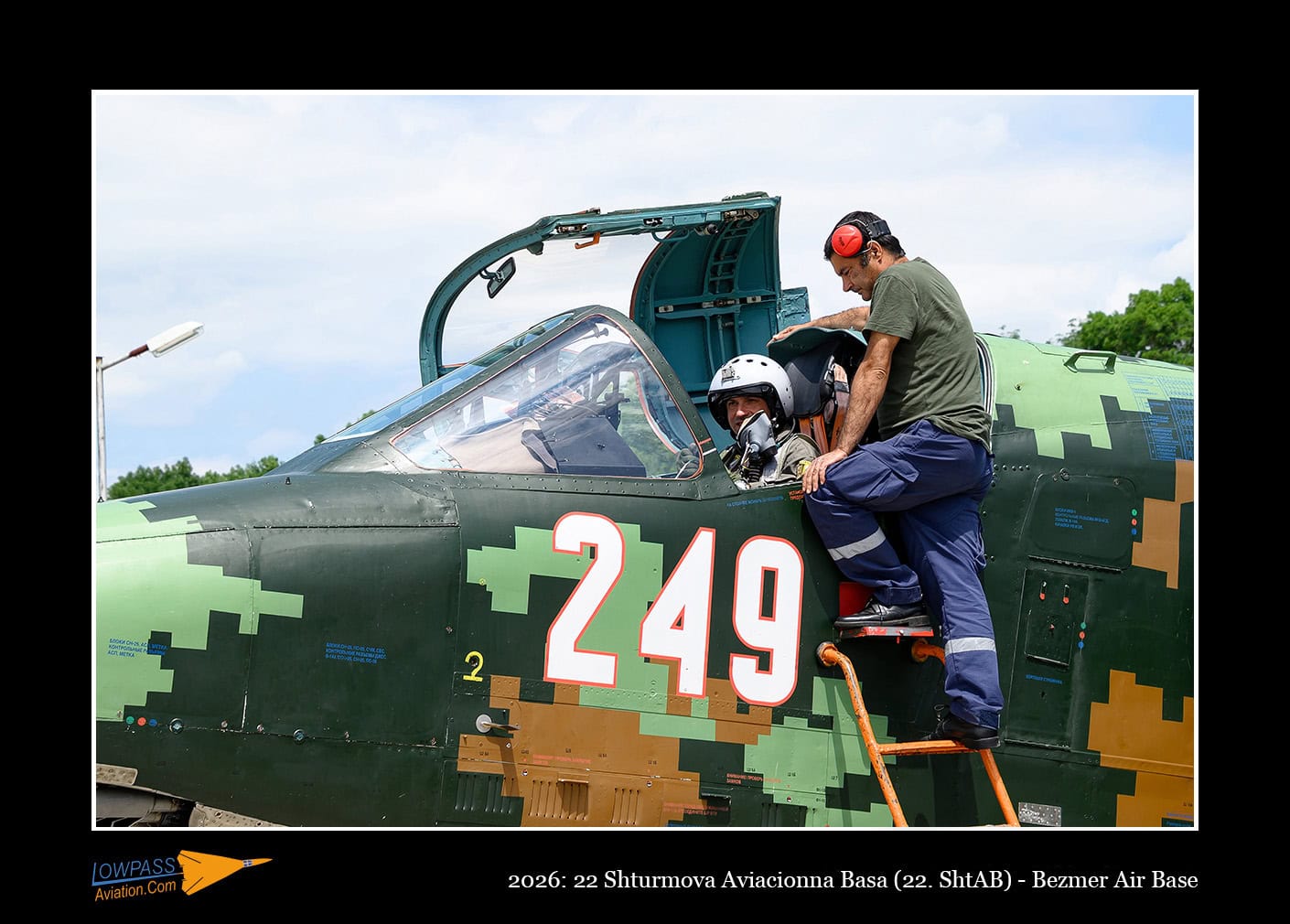
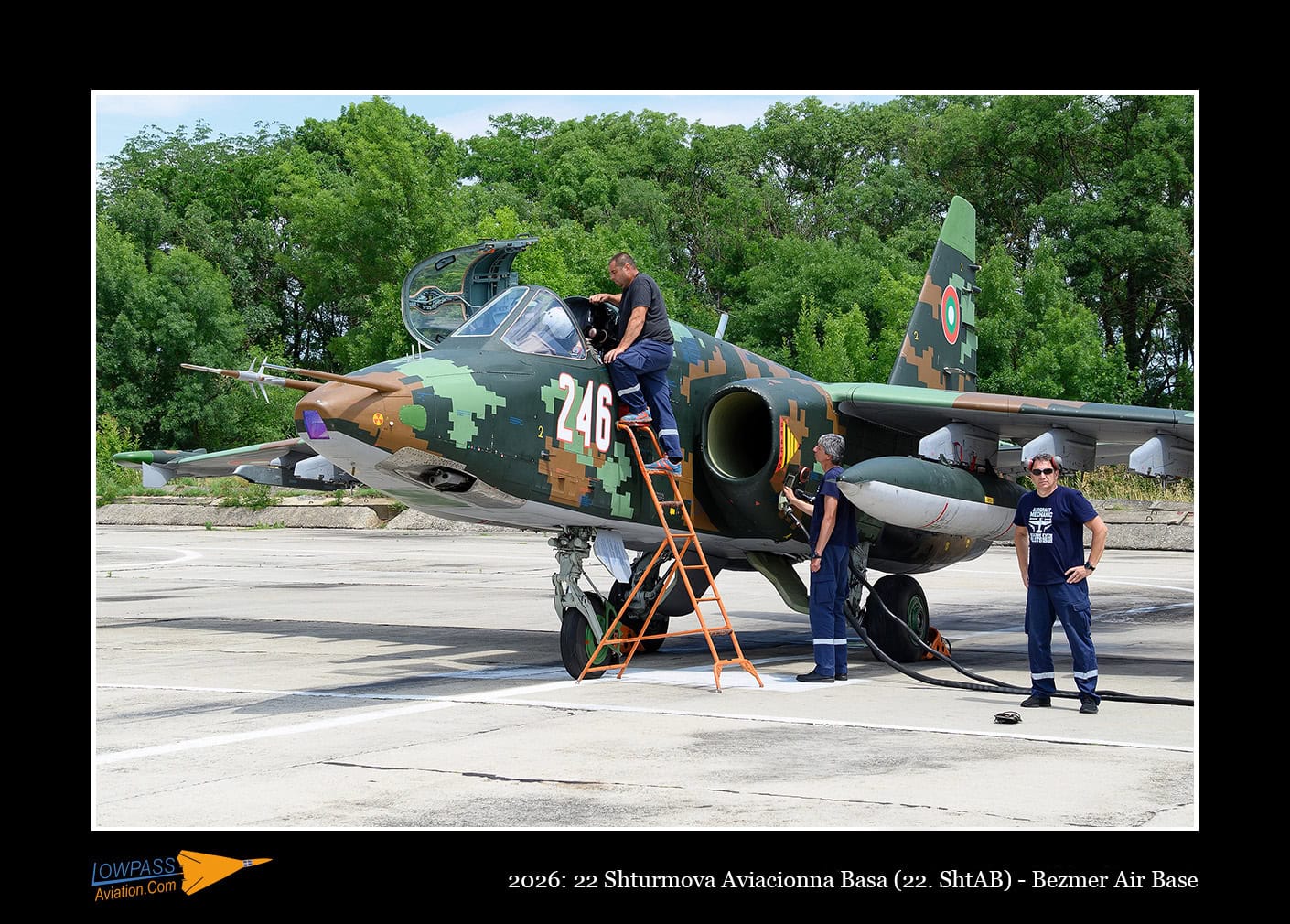
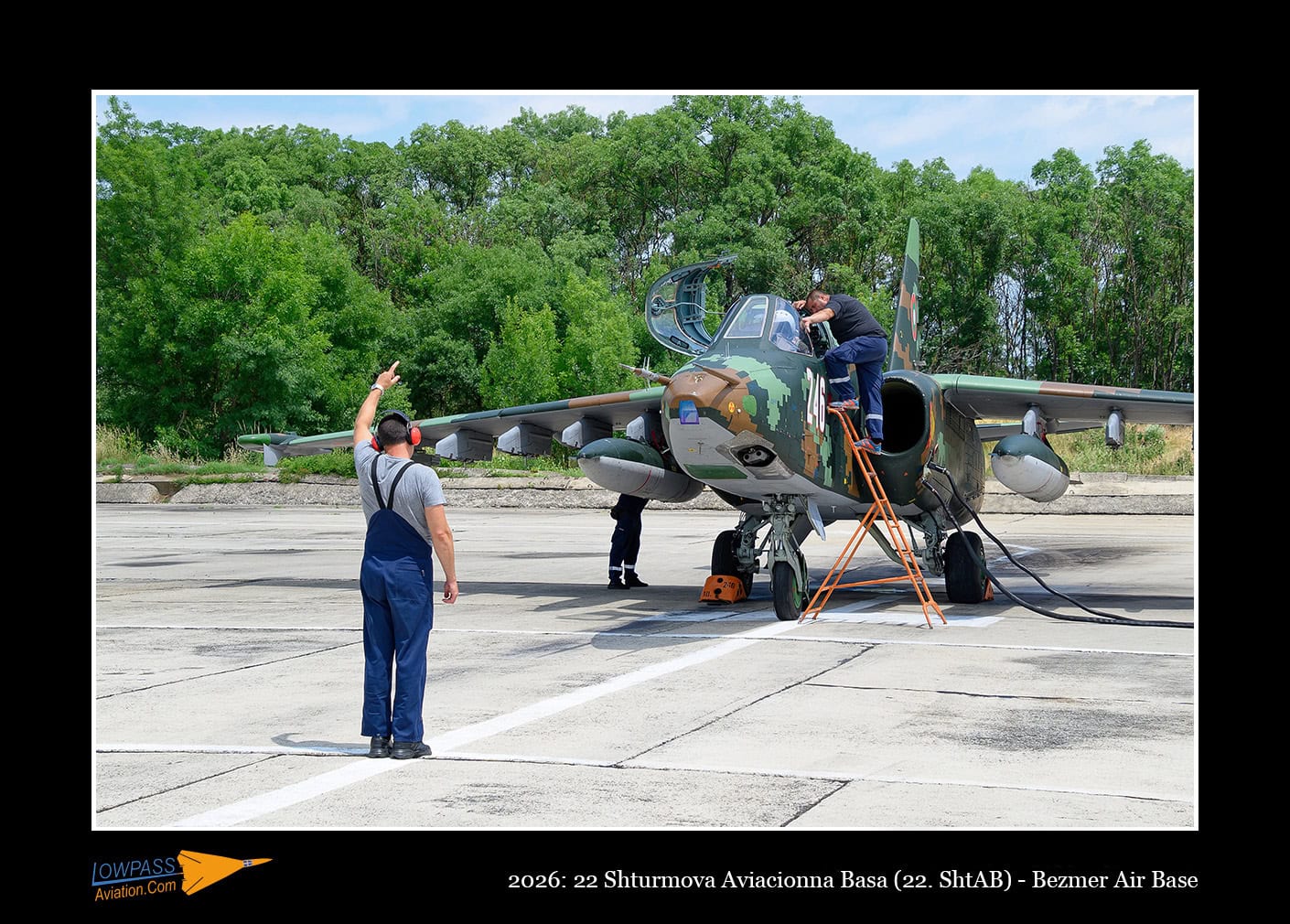
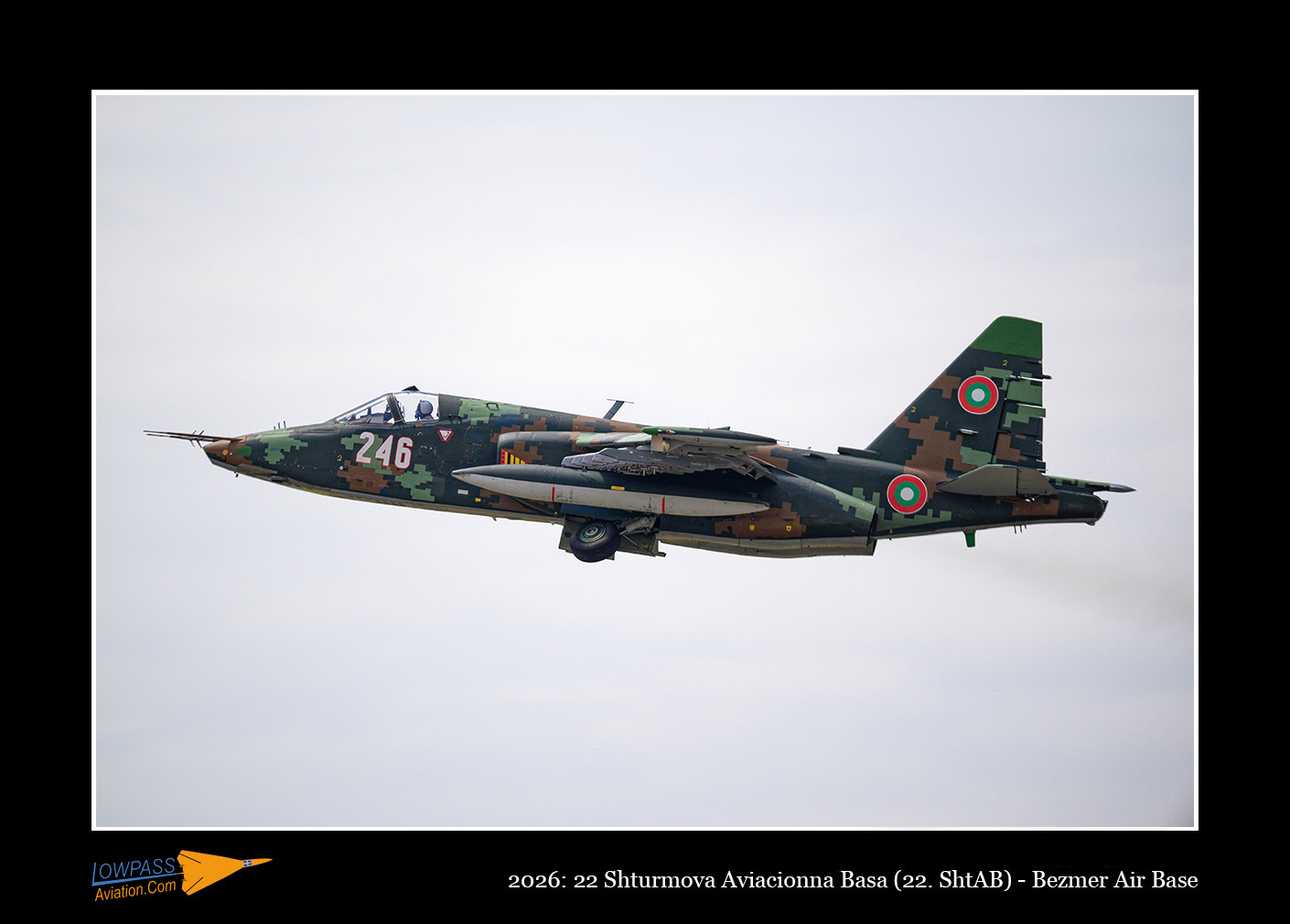
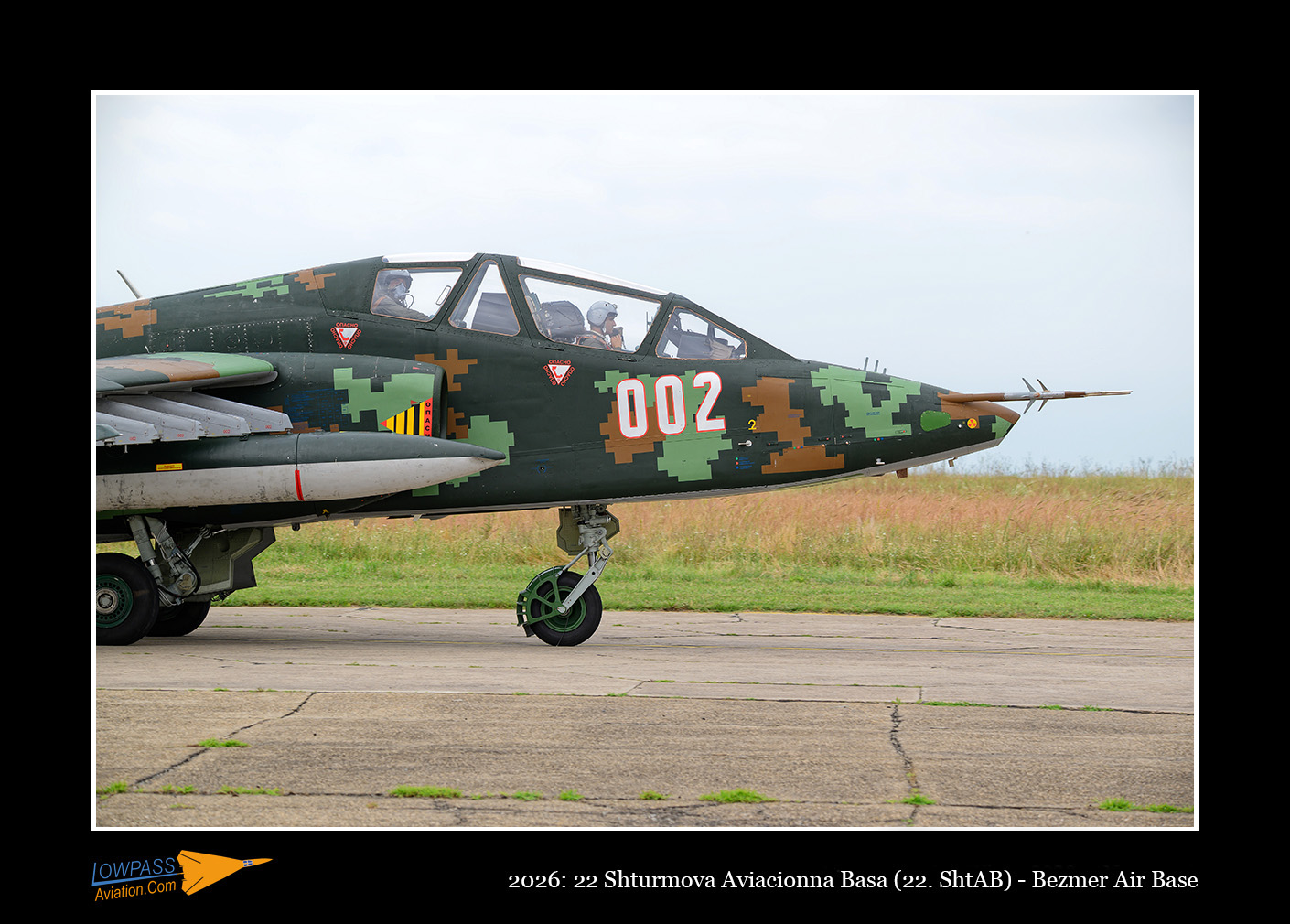
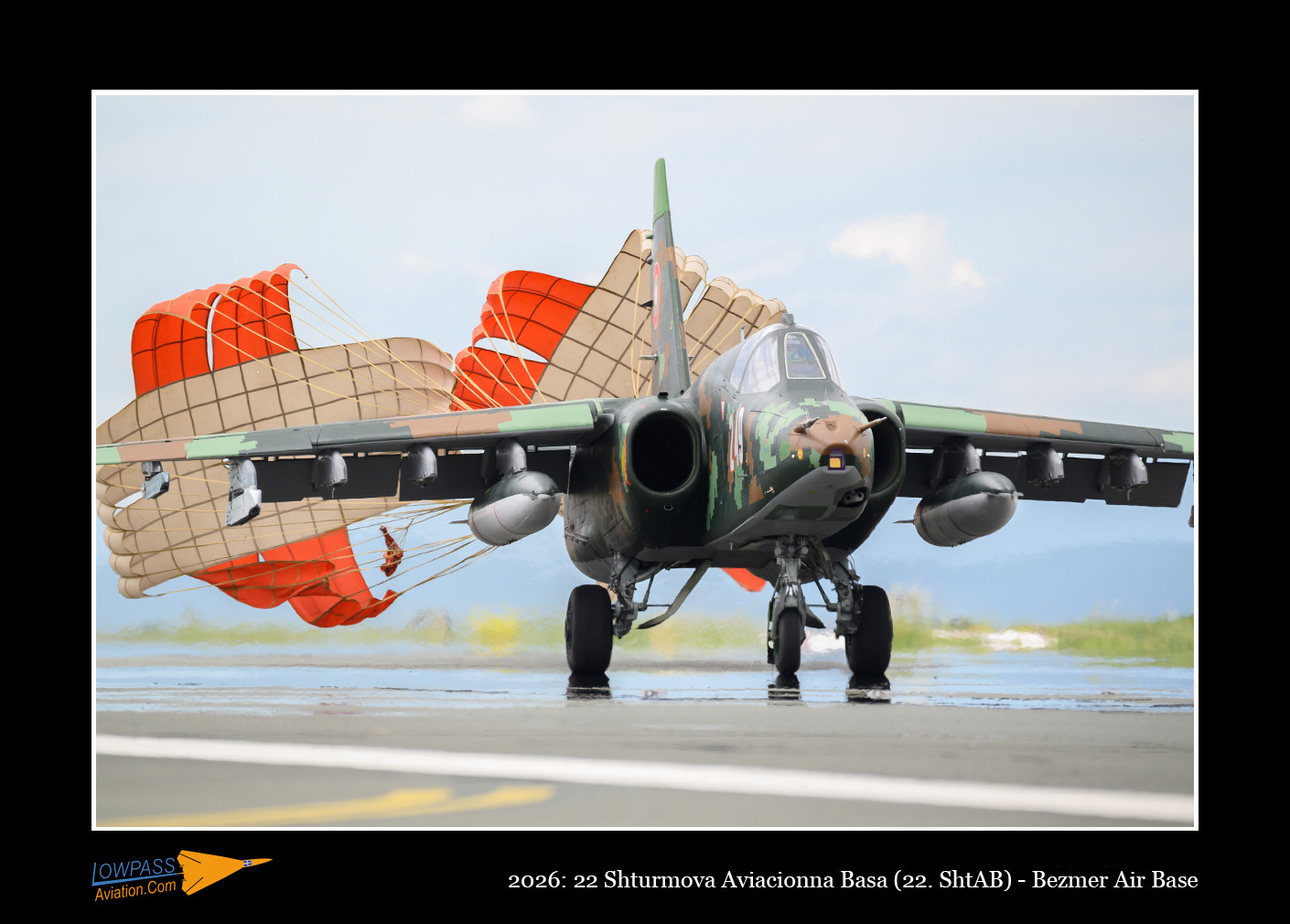
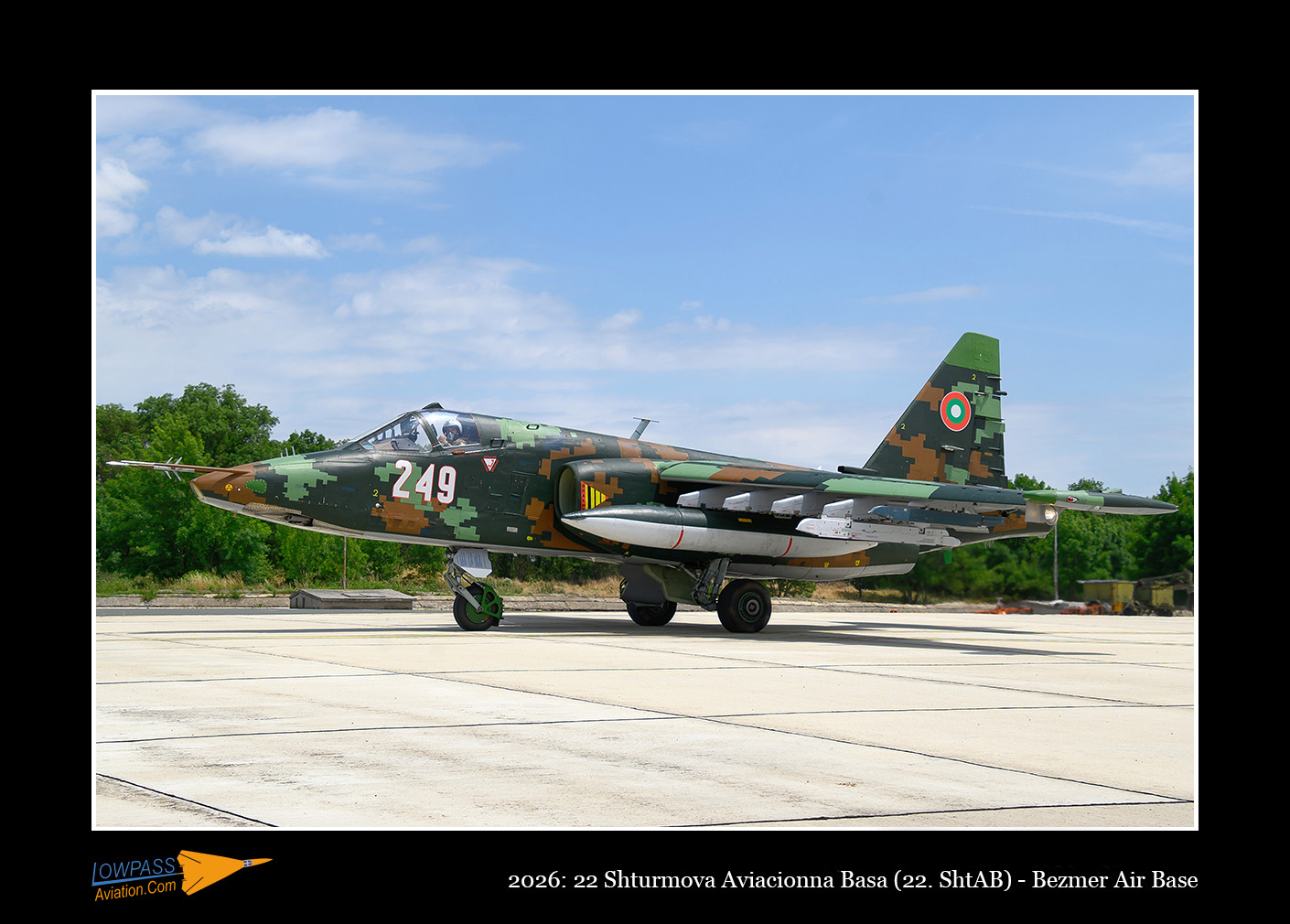
Between September 2020 and February 2021 all 8 modernized Su-25 were re-delivered to the Bulgarian Air Force at Bezmer. All Su-25 aircraft received a splendid pixel paint scheme with light green, dark green and dark brown colors. It’s expected that the Su-25 aircraft stay in active service until at least 2028, but the expectation is they will be in service for longer than 2028.The Bulgarian Air Force was considering sending the other 6 Su-25 aircraft, 4 single-seat and 2 double-seat aircraft, to the 558th Aviation Repair Plant (558thARP) Baranovichi, Belarus for the same major overhaul and life extensio nprogram but due to the political situation now it’s impossible to overhaul the aircraft in Belarus.Unfortunately, a single-seat Su-25K crashed on 28 September 2022. The pilot lost control during the landing at Bezmer Air Base, necessitating ejecting the aircraft. Luckily the pilot survived. This was only the second loss of a Su-25 in the 40 years the Bulgarian Air Force is operating this type. On 17 April 1989, there was an incident during a bomb attack on the Pitovo training ground causing the Su-25 to crash and sadly killing the pilot.

Training Area
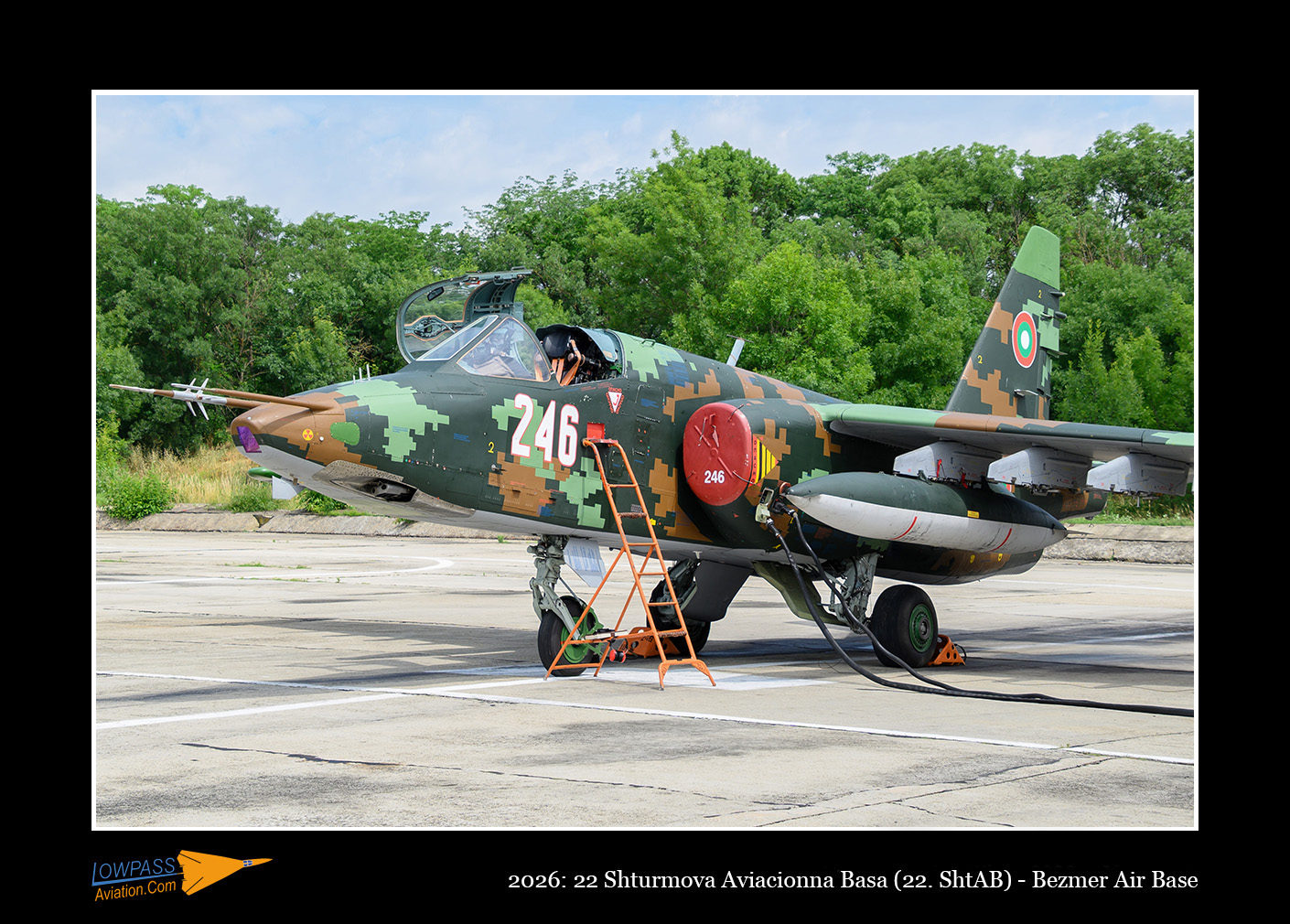
Between 25 and 30 miles from Bezmer Airbase the Novo Selo training range is situated. The range has a surface area of almost 56 square miles. Presently the range is not only used by the Bulgarian Air Force, but since Bulgaria entered NATO (North Atlantic Treaty Organization) on 29 March 2004 the range is also used by other NATO members as well. The range has special areas for tankshooting and reconnaissance training. All of this makes it an ideal training facility for the Bulgarian Air Force Su-25 crews to practice their skills. There are also shooting exercises organized by the Bulgarian Air Force in which other countries, like the United States Air Force, participated in the past.
The Bulgarian Air Force is also hosting international exercises which mainly are operated from Graf Ignatievo but Bezmer had an important role in these exercises. In the past allied fighters participated as United States Air Force F-15and F-16s, Italian Air Force EF-2000 and Tornado and Serbian Air Force MiG-29s. These exercises are fundamental for the Bulgarian Air Force pilots and crews to familiarize with operational procedures and standard decisions to be taken during missions, tactics and techniques, used by their colleagues of NATO, with the final aim to enhance the interoperability between the Bulgarian Air Force and other Allied forces to bolster readiness to conduct combined air operations.
The authors of Lowpass Aviation.com would like to thank the personnel of the Bulgarian Air Force for their hospitality and help during our visit at Bezmer Air Base!

